
Lead-203 (Pb-203) is a radioactive isotope of lead with a half-life of about 51.9 hours. It decays by electron capture to stable thallium-203 and emits a prominent gamma ray at approximately 279 keV. Its suitable half-life and gamma emission make Pb-203 particularly useful for nuclear imaging and gamma spectroscopy.

Pb-203 is primarily used in nuclear medicine research and SPECT imaging. It is especially valuable as a diagnostic partner for the alpha-emitting isotope Pb-212: both isotopes have the same chemical properties, allowing Pb-203 imaging to help study the distribution and behavior of Pb-212-based targeted radiopharmaceuticals before or during therapy.

Pb-203 does not occur naturally in significant quantities and is produced artificially, typically using particle accelerators. It can be produced by irradiating suitable thallium targets with protons and subsequently separating and purifying the Pb-203. In practice, it is mainly encountered at isotope-production facilities, radiopharmaceutical laboratories, and nuclear medicine research centers.
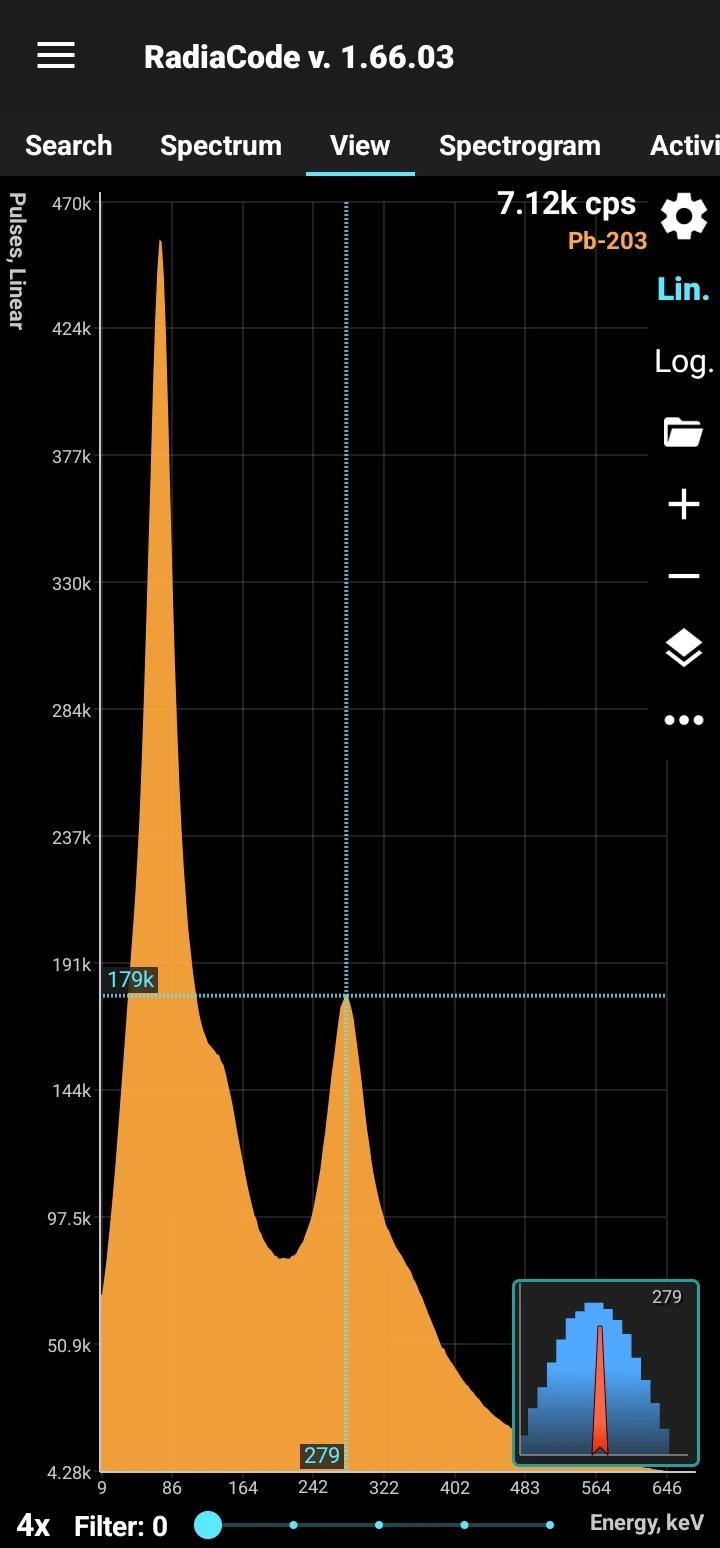
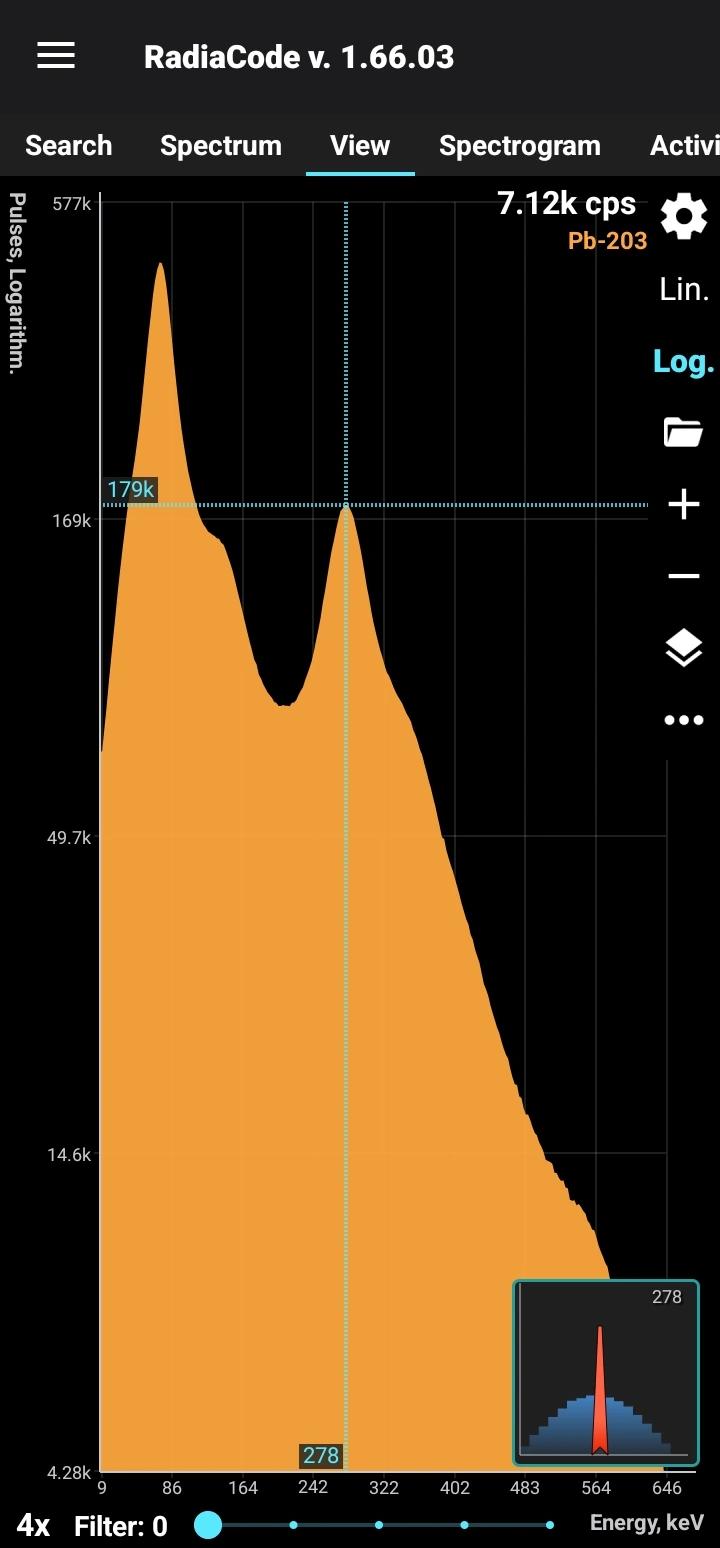
Pb-203
Plumbum-203
Half-life: 51.9 hours Main emission lines: 279 keV
Decay mode ec
Gamma
| Energy, keV | Intensity, % |
| 279.1952 | 80.94 |
| 401.32 | 3.35 |
X-rays
| Energy, keV | Intensity, % |
| 72.874 | 43 |
| 8.952 - 15.344 | 34.8 |
| 70.832 | 25.48 |
| 82.116 - 85.145 | 19 |
| 82.116 - 83.142 | 14.63 |
| 84.810 - 84.921 | 4.34 |