
Carbon-14 (C-14) is a naturally occurring radioactive isotope of carbon with a half-life of about 5,730 years. It decays by beta-minus emission to stable nitrogen-14, releasing beta particles with a maximum energy of about 156 keV. C-14 does not produce characteristic gamma rays during its decay.

C-14 is best known for radiocarbon dating, which is used to determine the age of archaeological, geological, and biological materials containing carbon. It is also widely used as a radioactive tracer in biological, environmental, and chemical research to follow the movement and transformation of carbon-containing compounds.

C-14 is continuously produced in the upper atmosphere when cosmic-ray-generated neutrons interact with nitrogen-14. It becomes part of atmospheric carbon dioxide and enters plants, animals, and other living organisms through the carbon cycle. As a result, trace amounts of C-14 are naturally present in the atmosphere, living organisms, soils, oceans, and other carbon-containing materials.
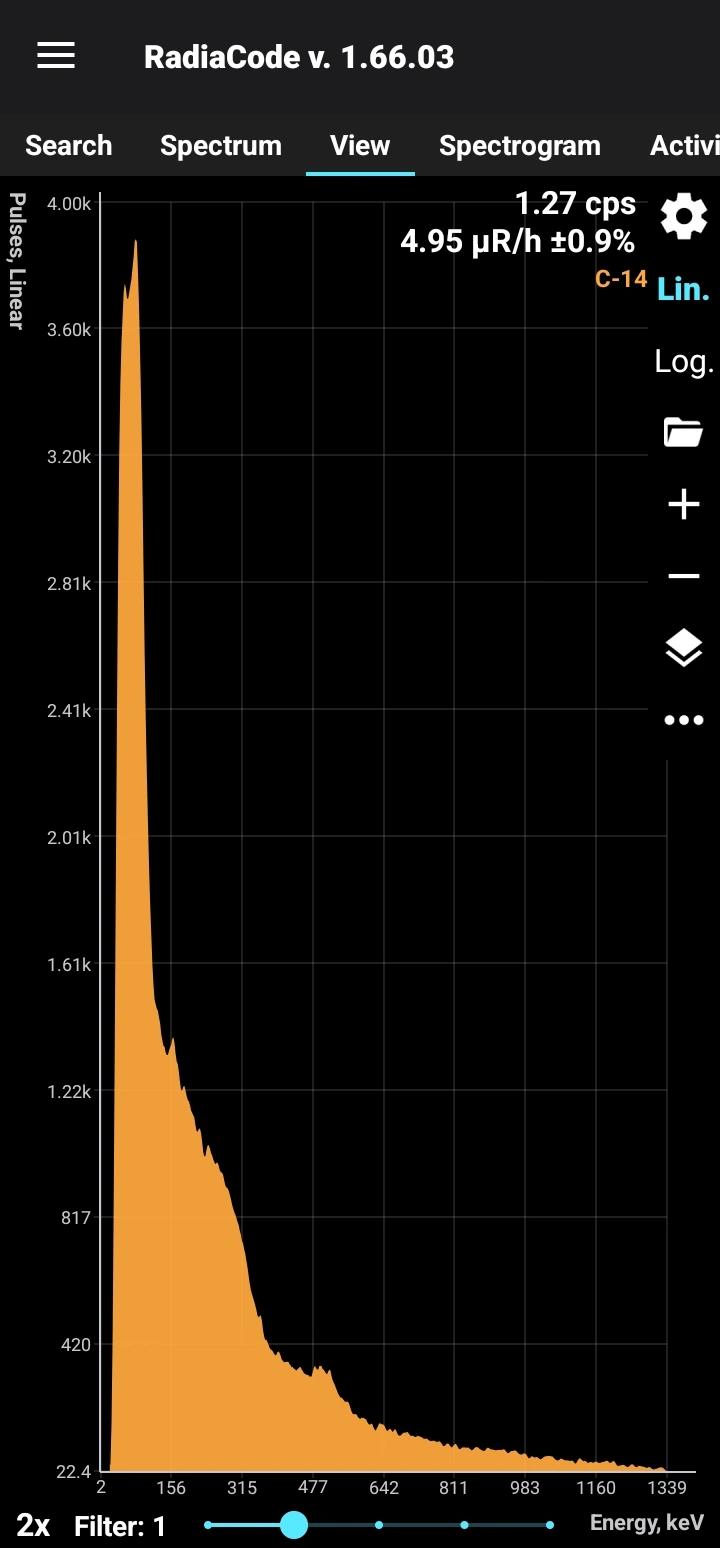
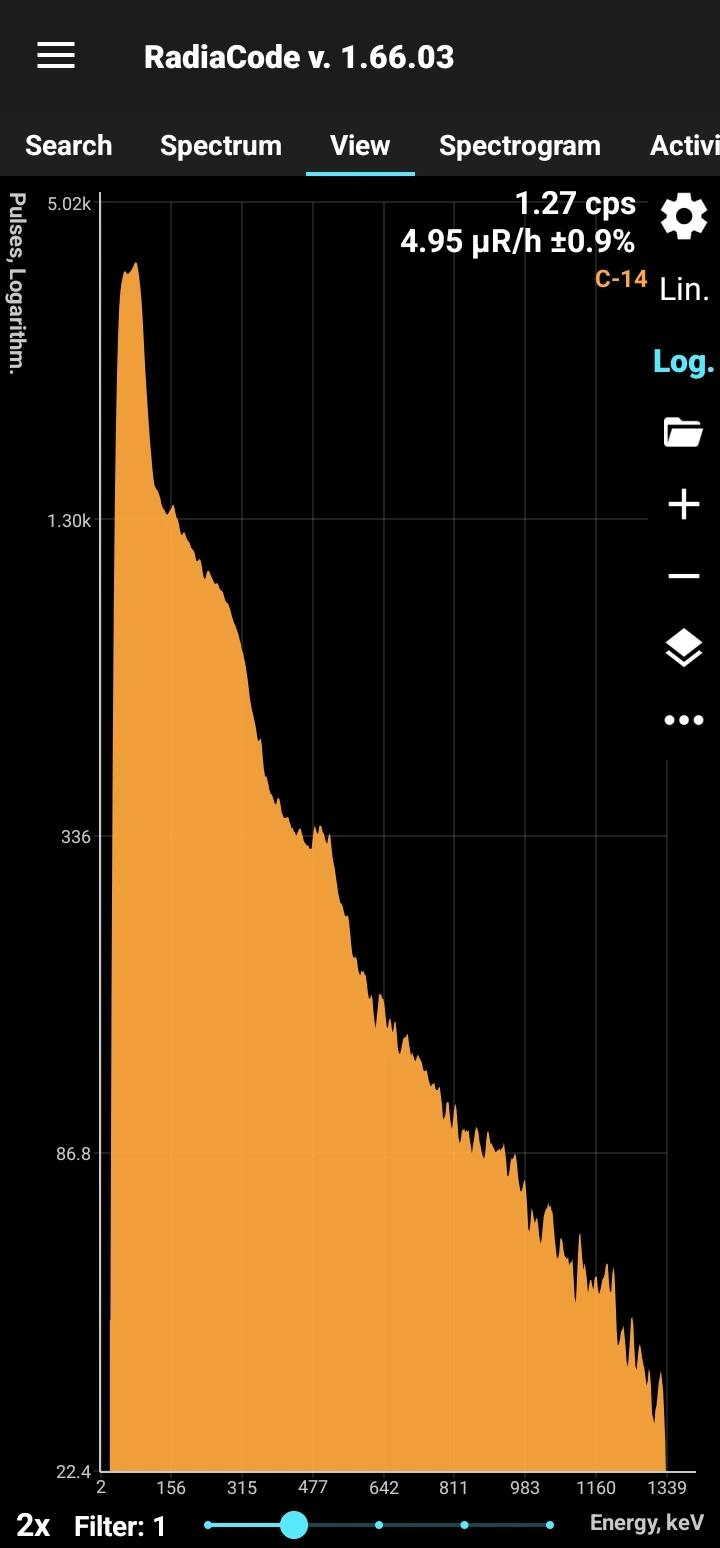
C-14
Carbon-14
Half-life: 5730 years Main emission lines: —
Decay mode Beta-
Beta-
| Avg. En., keV | Intensity, % | Decay En., keV |
| 49.47 | 100 | (156.469) |